
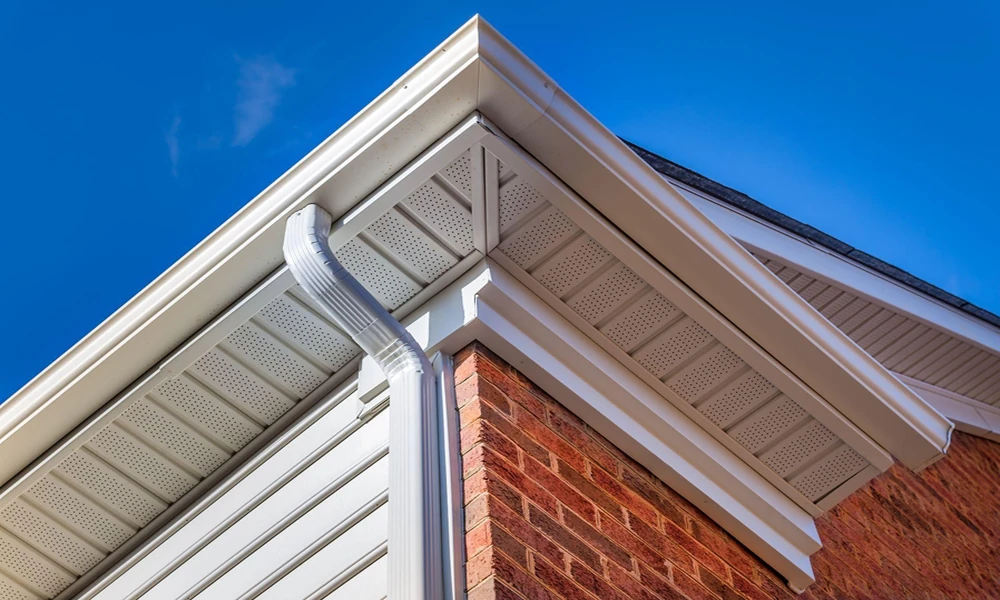

Gutters are easy to overlook when they appear to be doing their job. However, even a small drainage problem can create conditions that gradually damage the materials surrounding a home’s roofline.
An occasional overflow, a loose gutter section, or persistent dripping may seem like a minor maintenance issue. But when water repeatedly reaches areas that are supposed to remain protected, the consequences can extend beyond the gutter system itself.
Understanding how these problems develop helps homeowners recognize warning signs early, make informed repair decisions, and protect the exterior of their property.
Why Proper Gutter Drainage Matters
A gutter system collects rainwater from the roof and directs it toward downspouts, where it can be discharged away from vulnerable areas of the home.
When gutters become clogged with leaves, debris, or sediment, water may spill over their edges instead of flowing through the intended drainage path.
This overflow can repeatedly wet the fascia boards, which are located along the roof’s lower edge. These boards commonly provide an attachment surface for gutters and help create a finished transition between the roof and exterior walls.
Wooden fascia boards are particularly vulnerable when moisture remains trapped around them. Paint or protective coatings may slow moisture exposure, but damaged finishes and persistent wetness can eventually allow deterioration.
The problem may develop gradually, making regular observation important even when no obvious leaks are visible inside the house.
Common Warning Signs of Hidden Roofline Damage
Roofline damage does not always begin with a dramatic failure. In many cases, the earliest clues are subtle changes in appearance or gutter performance.
Homeowners should watch for several common warning signs.
Peeling or bubbling paint: Paint that separates from fascia boards may indicate repeated moisture exposure. Although aging coatings can also cause peeling, persistent dampness deserves closer examination.
Dark stains or discoloration: Unusual staining beneath gutters can suggest that rainwater is repeatedly reaching the same surfaces.
Sagging or detached gutters: Gutters that pull away from the roof edge may have loose fasteners, damaged attachment points, or deteriorating wood beneath them.
Soft or crumbling wood: Fascia that feels unusually soft or visibly breaks apart may have experienced significant decay.
Visible gaps near the roof edge: Openings between exterior components can allow additional moisture intrusion and may create access points for pests.
One symptom does not necessarily indicate extensive damage. However, several warning signs appearing together can justify a more detailed inspection.
Homeowners should assess these conditions from the ground whenever possible rather than climbing onto roofs or unstable ladders.
When Roofline Damage Requires More Than Routine Maintenance
Not every gutter problem requires replacing exterior building materials.
A minor clog may be resolved through cleaning, while a loose gutter bracket may need appropriate fastening or adjustment. However, these maintenance measures cannot restore wood that has already deteriorated significantly.
If fascia boards have become soft, split, or structurally unsuitable for holding gutter fasteners, replacing the affected material may be necessary.
In these situations, professional fascia replacement services can address deteriorated boards while allowing the surrounding gutter attachments and roof-edge conditions to be evaluated.
The extent of the work depends on the damage. A localized problem may involve replacing a limited section, while widespread decay can require a broader repair plan.
It is also important to identify why the damage developed.
For example, replacing rotten fascia without correcting an overflowing gutter or improperly directed roof runoff may leave the new material exposed to the same conditions.
A lasting repair should address both the visible deterioration and the underlying moisture problem.
How Gutter Problems Affect Nearby Exterior Components
Fascia boards are not the only materials that may be affected by poor drainage.
Soffits, located underneath the roof overhang, can also experience moisture damage when water enters gaps near the roof edge. Depending on the material and construction, prolonged exposure may lead to staining, deterioration, or damaged finishes.
Water can also travel behind exterior trim or siding when roof-edge details are compromised.
This does not mean that every overflowing gutter will cause widespread structural damage. The outcome depends on the amount of water, duration of exposure, construction details, and condition of the affected materials.
Nevertheless, homeowners should avoid treating gutter issues as completely separate from the rest of the building exterior.
During an inspection, it can be helpful to check for staining beneath the eaves, loose trim, deteriorating sealant, and visible changes around gutter attachment points.
Examining related components together can reveal whether a drainage problem is isolated or part of a larger maintenance concern.
Practical Ways to Prevent Recurring Roofline Damage
Preventive maintenance can significantly reduce avoidable moisture exposure around the roof edge.
Start by checking gutters periodically, particularly after storms or periods of heavy leaf accumulation. Remove blockages safely and confirm that downspouts discharge water effectively.
Observe gutter performance during rainfall from a safe location. Water pouring over one section may indicate a blockage, improper slope, or drainage limitation.
Inspect accessible fascia and soffit surfaces for deteriorating paint, cracks, staining, and visible gaps. Address damaged protective finishes before exposed wood remains wet repeatedly.
It is equally important to consider roof-edge details.
Properly installed drip-edge flashing helps direct roof runoff toward the drainage system rather than allowing water to reach vulnerable surfaces behind the gutter.
Gutter alignment and secure attachments also matter. A system that pulls away from its mounting surface may allow water to enter areas that were previously protected.
Finally, make inspections part of broader exterior maintenance rather than waiting for a noticeable failure.
After severe weather, a brief visual assessment from the ground may reveal detached gutter sections, debris buildup, or new staining that deserves attention.
If deterioration is visible, a qualified professional can determine whether cleaning, adjustment, localized repair, or replacement is appropriate.
Conclusion
Small gutter problems can become more complicated when water repeatedly reaches the wood and other materials surrounding a home’s roofline.
Recognizing warning signs such as staining, peeling paint, loose gutters, and deteriorating fascia can help homeowners respond before damage becomes more extensive.
The most effective approach combines routine drainage maintenance, timely inspections, and repairs that address the source of moisture rather than only its visible effects.
By paying attention to how gutters interact with the rest of the exterior, homeowners can make better maintenance decisions and help preserve their roofline over time.




Leave a Comment