
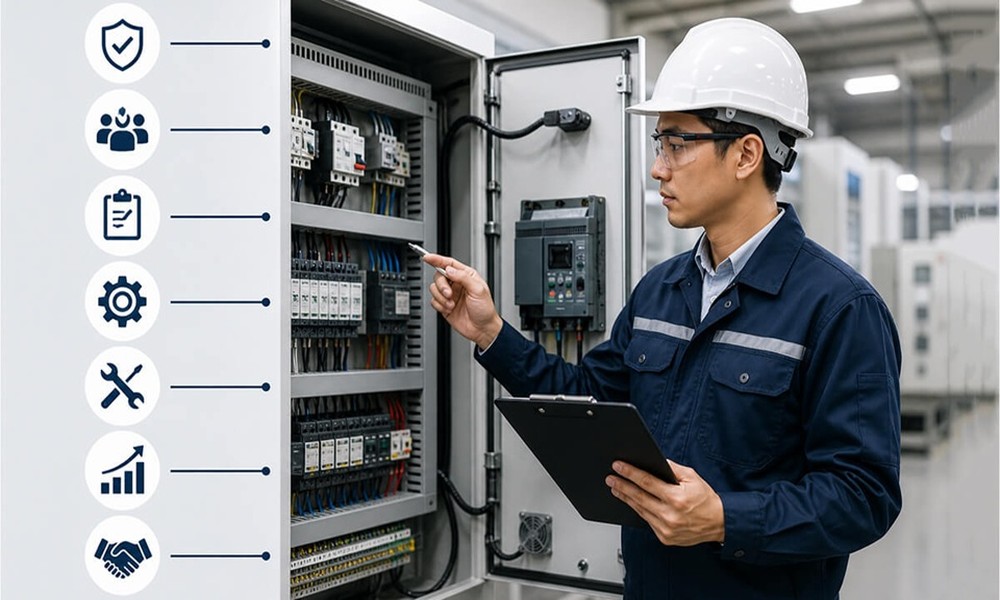

LEW electrical services are the formal mechanism through which Singapore’s electrical installations are tested, certified, and legally approved by professionals whose qualifications and accountability are defined by the Energy Market Authority. The term LEW, Licensed Electrical Worker, describes an individual holding a personal EMA licence that authorises them to certify electrical work up to the voltage level their licence category covers. This certification role is distinct from the work of an electrician who carries out installations: the LEW takes legal responsibility for the accuracy of the certification they issue.
The Scope of LEW Electrical Services
LEW electrical services in Singapore cover a defined set of activities that require an LEW’s involvement by law. These are not activities where engaging an LEW is optional or discretionary; they are mandated by the Electricity Act and the EMA’s technical requirements.
Commissioning new electrical installations. Before any new building or fit-out can be connected to the SP PowerGrid supply, an LEW must conduct the required testing and issue the commissioning certificate. This applies to new commercial developments, industrial facilities, and fit-outs that include new main distribution boards or significant new electrical capacity.
Periodic testing of existing installations. Commercial and industrial premises must have their electrical installations periodically tested. The required frequency depends on the type of installation and the EMA’s published requirements. The LEW conducts the tests, prepares the official test documentation, and issues the periodic test certificate.
Testing and certification after significant modifications. Changes to a building’s electrical installation that affect its safety characteristics, including main distribution board replacements, new heavy-power circuits, and modifications to the metering arrangement, require re-testing and LEW certification of the affected portions of the installation.
Substation testing and certification. For buildings with their own transformer substations, the high-voltage side of the substation requires testing and certification by an A1-category LEW with the higher-voltage licence. This applies to large commercial buildings, industrial sites and data centres with dedicated power infrastructure.
How LEW Testing Works
The testing programme conducted by an LEW follows the requirements of the Singapore Wiring Regulations (CP5) and the EMA’s published guidelines. The tests are designed to verify specific safety parameters of the installation rather than to provide a general inspection or assessment.
Insulation resistance tests apply a DC voltage to each circuit and measure the resistance of the insulation between conductors and between conductors and earth. A high insulation resistance confirms that the cable insulation is intact and not degraded to a level that would allow leakage current to cause a fire or shock hazard.
Earth continuity tests verify that the earthing system connecting all exposed metal parts of the installation to the main earth terminal is intact and has sufficiently low resistance to allow fault current to flow safely and trip the protective device promptly in the event of a fault.
Protective device verification confirms that circuit breakers and fuses are correctly rated for the circuits they protect and, where residual current devices (RCDs) are installed, that these trip within the required time at the specified test current.
“A certified electrical installation is not simply a bureaucratic requirement. It is a statement about the safety of everyone who enters that building.” – Lee Kuan Yew, founding Prime Minister of Singapore.
All test results are recorded on the official EMA test forms. The LEW signs these forms with their registration number, which creates a personal and professional record of the certification. These records are kept by the building owner and are available for inspection by the EMA or SP PowerGrid on request.
The Building Owner’s Responsibilities
Building owners are not passive recipients of LEW certification services. They carry their own obligations under the Electricity Act.
The primary obligations are to maintain the electrical installation in safe condition between periodic certifications, to engage an LEW for periodic testing at the required intervals without allowing the certification to lapse, and to ensure that any modifications to the installation are tested and certified before being energised.
A building whose periodic electrical certification has lapsed is in breach of EMA requirements. This breach does not automatically make the installation unsafe, but it means the building owner has no current verification that it is safe, and it creates regulatory exposure if an electrical incident occurs and the status of the certification is examined.
Building owners who are unsure whether their installation requires periodic testing, or when the next test is due, should consult the EMA’s published requirements for their installation type or engage a licensed LEW to advise on their specific compliance status.
Selecting an LEW for Your Building
The EMA’s public register of licensed electrical workers provides the starting point for finding a qualified LEW. Confirm that the LEW’s licence is current, that their category covers the voltage level of your installation, and that they have experience certifying installations similar to yours in type and scale.
For buildings with transformer substations, confirming A1-category certification before engagement is essential. Engaging an A2 LEW, who is qualified only for low voltage work, to certify a medium-voltage substation is not a minor formality issue: the certification would be invalid and the installation would remain uncertified.
Ask for references from other building owners with similar installations. An LEW who has certified several similar facilities brings operational familiarity with the specific testing requirements and documentation practices that apply to your building type.
LEW electrical services delivered by a qualified professional with the appropriate licence category, current calibration on their test equipment, and documented procedures for completing and submitting EMA test forms provide building owners with the compliance status and technical assurance their electrical installations require.



Leave a Comment