
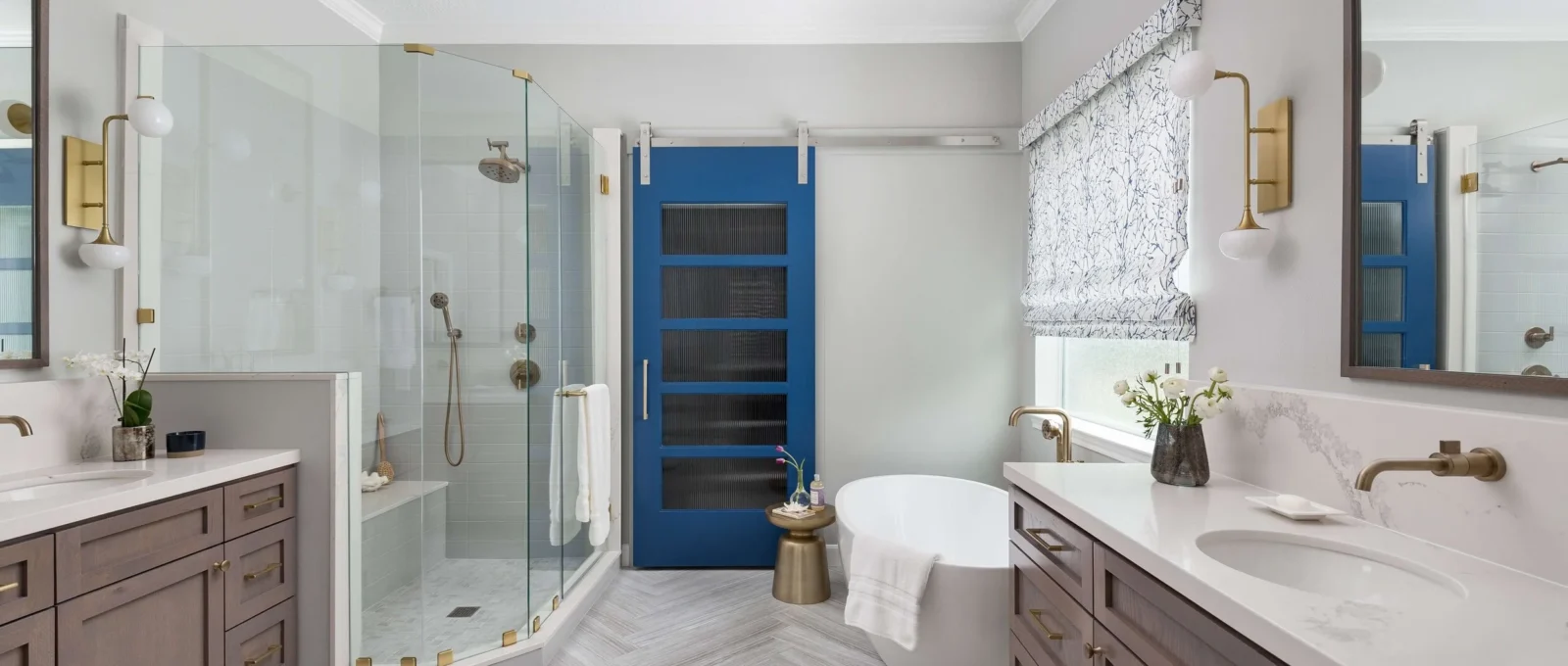

Here is the thing about master bathrooms: this is the one room in the house you design entirely for yourself. No guests, no kids, no compromises dictated by practicality for other people. Exploring various master bathroom remodel ideas is the first step, as a well-executed remodel is one of the most personally rewarding home projects you can undertake.
The top master bathroom remodel ideas that add both luxury and resale value include a spa-style walk-in shower with rain head and body jets, a double floating vanity, heated tile floors, a freestanding soaking tub, and recessed niche storage. Most homeowners budget between $10,000 and $35,000 for a full master bath remodel.
Spa-Inspired Upgrades Worth Every Dollar
The spa bathroom trend has staying power because it is rooted in something real: people want a room that helps them decompress. These upgrades deliver that feeling consistently.
- Rain shower head: ceiling-mounted, wide-format shower head that provides a full-coverage water experience. Usually installed as part of a walk-in shower conversion. Cost: $200-$800 for the fixture.
- Steam shower: a sealed shower enclosure with a steam generator. Transforms your bathroom into a home steam room. Requires proper ventilation and a dedicated electrical circuit. Cost: $2,500-$6,000 installed.
- Heated tile floors: radiant electric mat installed under tile flooring. Turns on via a timer so the floor is warm when you step out of the shower. Cost: $600-$2,500 depending on square footage.
- Soaking tub: deep, freestanding or built-in tub designed for full-body immersion. The freestanding version doubles as a focal point in larger master baths. Cost: $800-$5,000 for the tub, plus plumbing.
Vanity Transformation Ideas
The vanity is where most people start their day. A good one makes that routine feel better. A great one makes the whole room.
- Double vanity: side-by-side sinks with shared or separate storage – practical and premium-feeling. The most requested upgrade in shared master bathrooms.
- Floating (wall-mount) vanity: creates visual breathing room in the space, easier to clean underneath, and feels more contemporary than floor-standing cabinets.
- Custom-height vanity: standard vanity height is 32 inches – many homeowners prefer 35-36 inches (counter height) for more comfortable use. Worth specifying when ordering custom.
- Statement mirror: an oversized single mirror or two custom-framed mirrors above each sink area gives the vanity wall a finished, intentional look without over-decorating.
Storage Solutions That Actually Look Good
Master bathrooms can accumulate a lot – skincare, medications, towels, cleaning supplies. Good storage hides all of it.
- Recessed wall niches: built into the shower wall or beside the vanity, these hold toiletries or decor without projecting into the room. Plan them before tile work begins.
- Built-in linen tower: a tall cabinet integrated beside or between vanity sections provides towel storage without freestanding furniture.
- Under-vanity drawers vs. doors: drawers dramatically outperform cabinet doors for usability – you can see and access everything without crouching. Specify full-extension soft-close drawers.
Fixture Upgrade Comparison
| Fixture | Standard Builder Grade | Mid-Range Upgrade | Premium Upgrade |
|---|---|---|---|
| Shower head | Basic fixed head, $30-80 | Rain head + hand held, $200-500 | Ceiling rain + body jets, $800-2,500 |
| Faucet (vanity) | Chrome, 2-handle, $50-120 | Single-hole, brushed nickel, $150-400 | Waterfall or designer, $400-1,200+ |
| Toilet | Standard tank, $150-300 | Elongated comfort height, $300-600 | Bidet-integrated smart toilet, $800-3,000 |
| Shower valve | Pressure-balance, $80-150 | Thermostatic, $300-600 | Digital/programmable, $800-2,000 |
| Towel bars/hooks | Chrome basic set, $30-80 | Coordinated set, brushed brass or black, $150-350 | Heated towel rail, $300-800 |
Wet Room vs. Separate Shower and Tub
One of the key layout decisions in a master bath remodel is whether to keep the tub and shower as separate fixtures or move toward a wet room concept.
- Wet room: entire bathroom floor is waterproofed, shower area flows openly into the space without a door or step. Feels incredibly luxurious and easy to clean, but requires professional waterproofing and a sloped floor drain.
- Separate tub and walk-in shower: the traditional master bath layout. The tub becomes more of a feature piece, used less often but valuable for resale and the occasional long soak.
- Shower only (no tub): increasingly popular in master baths when a soaking tub elsewhere exists. Creates space for a genuinely large shower. Lower material cost for the plumbing fixtures themselves.
Cost Breakdown by Upgrade
| Upgrade | Cost Range | Adds Resale Value? |
|---|---|---|
| Double floating vanity | $1,800 – $5,000 | Yes – strong appeal to buyers |
| Walk-in shower (tile, frameless glass) | $4,000 – $10,000 | Yes – top ROI upgrade |
| Freestanding soaking tub | $2,500 – $7,000 | Yes – visual appeal, lifestyle signal |
| Heated tile floors | $1,200 – $3,000 | Moderate – niche but appreciated |
| Steam shower system | $2,500 – $6,000 | Moderate – appeals to specific buyers |
| Smart toilet (bidet) | $800 – $3,000 | Growing – increasingly expected in luxury |
| Custom tile work (feature wall) | $2,000 – $6,000 | Yes – differentiates from standard builds |
| Full master bath renovation | 70-80% ROI typical in most markets |
Final Thoughts
The master bathroom is where you start your day and end it. That daily routine adds up – years of mornings and evenings in a room that either lifts your mood or just gets the job done.
Prioritise the upgrades you will actually use: if you take showers, not baths, put the budget into an exceptional shower experience rather than a freestanding tub that collects dust. Design for your real life, not an imagined one – and you will not regret a single dollar spent.
Leave a Comment