
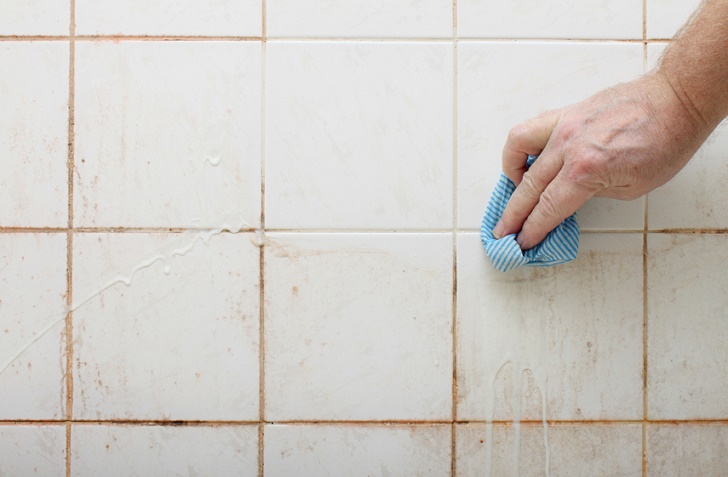

The most effective “how to clean shower tiles“ method involves a “dwell time” strategy. Use a baking soda paste for grout lines and a white vinegar solution or commercial cleaner for the tiles. Let it sit for 10–15 minutes before scrubbing. This allows the cleaner to break down soap scum and mildew properly, ensuring you aren’t just moving dirt around but actually removing it.
The method changes depending on what type of stain you’re dealing with. Soap scum, hard water deposits, mould, and general grime each respond to different solutions. Using the wrong one wastes effort – using the right one cuts your scrubbing time significantly.
Stain Type vs. Best Cleaning Method
| Stain Type | Looks Like | Best Solution | Avoid |
| Soap scum | Cloudy white film on tiles | White vinegar spray or commercial soap scum remover | Bleach (won’t help) |
| Hard water deposits | White/grey mineral crust, especially around taps | Vinegar soak, CLR, or citric acid solution | Abrasive scrubbers on glossy tiles |
| Mould on grout | Black or green spotting on grout lines | Bleach solution (1:4 with water) or hydrogen peroxide | Vinegar (ineffective on mould) |
| General grime / body oils | Dull, sticky surface feel | Dish soap + warm water, or alkaline bathroom cleaner | Nothing – easy to clean |
| Rust stains | Orange-brown marks near metal fixtures | Commercial rust remover (oxalic acid-based) | Bleach (makes rust worse) |
What You’ll Need
For natural cleaning: White vinegar, baking soda, dish soap, a spray bottle, an old toothbrush (for grout), a stiff-bristle scrubbing brush, and microfibre cloths.
For tougher jobs: Commercial bathroom cleaner (like HarpicBathroom or similar), grout cleaner with bleach, and optionally a steam cleaner for deep periodic cleaning.
Step-by-Step Cleaning Process
Follow this sequence for the best results:
Step 1 – Rinse first. Run the shower on hot for 2 minutes. Steam loosens soap scum and opens up grout pores, making everything easier to clean.
Step 2 – Apply cleaner and wait. Spray vinegar or your chosen cleaner across all tile surfaces. For grout, apply a baking soda paste (mix baking soda with a little water to a thick paste) directly on the lines. Let everything sit for 10-15 minutes – this dwell time is what does the real work.
Step 3 – Scrub tiles. Use a stiff brush in circular motions on tiles. The soap scum and grime should lift easily after the dwell time.
Step 4 – Scrub grout separately. Use an old toothbrush or a dedicated grout brush on the lines. Grout is porous and needs targeted scrubbing – a tile brush won’t reach it properly.
Step 5 – Rinse thoroughly. Use the showerhead to rinse all surfaces from top to bottom. Any cleaner left to dry on tiles can leave its own residue.
Step 6 – Dry. Wipe down tiles with a microfibre cloth or squeegee. This is the step most people skip – and it’s what prevents water marks and mould from forming again so quickly.
Grout Cleaning: The Part Most People Skip
Grout is the real enemy in shower cleaning. It’s porous, it absorbs soap and oils, and once mould takes hold in it, surface sprays alone won’t fix it.
- For light staining: Baking soda paste + toothbrush + rinse
- For mould: Apply a 1:4 bleach-water solution to grout, leave 10 minutes, scrub, rinse (ensure ventilation)
- For serious, set-in staining: Oxygen bleach (like OxiClean) dissolved in warm water, applied and left 30 minutes
- For prevention: Grout sealer applied once a year repels water and oils – dramatically reduces cleaning frequency
Cleaning Frequency and Maintenance Habits
| Task | Frequency | Time Required |
| Squeegee or wipe tiles after each shower | After every use | 30 seconds |
| Quick spray + wipe down | Weekly | 5-10 minutes |
| Full tile and grout scrub | Monthly | 20-30 minutes |
| Deep clean with grout treatment | Every 3-6 months | 45-60 minutes |
| Re-apply grout sealer | Annually | 30-45 minutes |
The secret to clean shower tiles isn’t more powerful chemicals – it’s shorter intervals between cleans. A 5-minute weekly wipe-down prevents the soap scum and mould buildup that requires an hour to fix. Develop the habit, and the big cleans become much easier.



Leave a Comment