
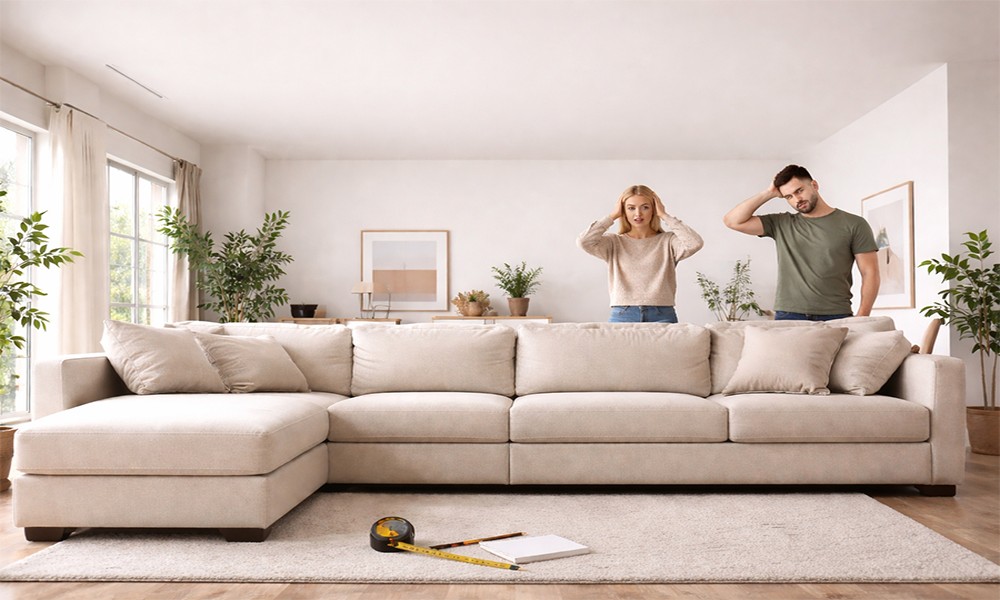

Few experiences sour a new furniture purchase faster than the moment a sofa won’t fit through the front door. The piece looked perfect online. The fabric matched the room. The price felt right. None of that matters if the dimensions don’t work in your actual space. Returns for size issues are among the most common and most preventable problems in furniture shopping.
A few minutes of measuring before placing an order saves hours of frustration after delivery. The process isn’t complicated. The basic tools are inexpensive. Knowing what to measure and how to translate those numbers into smart buying decisions transforms furniture shopping from a gamble into a confident purchase.
Why Measuring Matters More Than You Think
Furniture dimensions on websites tell you what a piece looks like in isolation. They don’t tell you how it works in your room. A sofa that fits the wall might still block traffic flow. A dining table that matches your floor plan might leave no room to pull out chairs. A bed that fits the bedroom might not fit through the bedroom doorway.
Returns for oversize furniture often involve restocking fees and return shipping costs. They also cost significant time without the furniture you wanted in the first place. Some custom or made-to-order pieces are simply non-returnable. The cost of getting the measurements wrong scales with the size of the purchase.
The Tools You Actually Need
Three simple tools handle most furniture measuring tasks. A 25-foot retractable tape measure. A notepad and pencil. A floor plan sketch of the room.
Some shoppers also use blue painter’s tape to mark the dimensions of a planned purchase directly on the floor. This trick gives you a visual sense of how much space the piece will occupy in real life rather than just on paper. The tape comes up cleanly without leaving residue on hardwood or carpet.
A laser distance measurer can speed things up for larger rooms, but a regular tape measure works fine for most jobs. Smartphone measuring apps have improved but still produce less reliable results than a physical tape.
Measuring the Room Itself
Start by sketching the room on paper. The sketch doesn’t need to be artistic. Rough rectangles and lines representing walls and openings are enough to capture what matters.
Measure each wall from corner to corner. Note any breaks for doors and windows. Mark fireplaces and built-ins on the sketch as well. Show the location of each opening on your sketch with a measurement showing how far it sits from the nearest corner. Note the swing direction of doors. A door that swings into the room takes up space that furniture can’t occupy.
Measure ceiling height as well. Most rooms run between eight and ten feet, but older homes and modern designs vary widely. Tall furniture pieces like armoires and bookshelves need clearance below the ceiling. A piece that fits the floor plan but bumps into the ceiling becomes a problem on delivery day.
Reading Reviews and Listings Carefully
Once you’ve measured the room, the next step is matching pieces to that space. Online listings provide dimensions, but the numbers can be presented inconsistently across retailers. Width, depth, and height labels sometimes get swapped. Reading the reviews of a specific piece often reveals what the official dimensions don’t.
For example, Coleman Furniture reviews often include photos from real customers’ homes that show the actual proportions in context. These photos can be more useful than catalog images for judging how a piece will feel in a room. Other customers may also note whether assembly was simpler than expected or whether the delivery process required extra space at the door.
Take a few extra minutes to scan recent reviews before completing a purchase. The information often saves a costly return.
Measuring Doorways and Pathways
Furniture has to get into your room before it can fill it. The path from the front door to the destination room is where most delivery problems happen.
Measure every doorway between the entrance and the final placement. Note the width and the height of each one. Don’t forget that doorways with door frames have a smaller usable width when the door is open and a still-smaller width if the door doesn’t fully fold back against the wall.
Stairways present their own challenges. Measure the width at the narrowest point. Note any turns or landings. Low overhangs deserve their own measurement. Some large pieces won’t navigate a tight stairway regardless of room dimensions.
Hallways with sharp turns can stop a wide sofa or large bed frame from reaching its destination. If a hallway turns ninety degrees, measure both the hallway width and the diagonal space available for pivoting a piece around the corner.
Elevator dimensions matter for apartment dwellers. Many freight elevators in apartment buildings can handle larger pieces than the passenger elevators most residents use. Ask the building manager about delivery access if you’re buying anything substantial.
Common Measuring Mistakes
Measuring only the wall length without accounting for baseboards or molding produces inflated numbers. The actual usable space is often two to three inches less than the raw wall measurement. Account for the trim when planning where larger pieces will sit.
Ignoring traffic patterns is another common error. A dining table might fit the room dimensions perfectly while still leaving no path between the table and the wall. A coffee table might fit between the sofa and the chairs while making it awkward to walk around the seating area. Plan for at least eighteen inches of clearance between major pieces for comfortable circulation.
Forgetting about throw rugs and area rugs leads to disappointment. A piece that looks right in raw room dimensions can crowd a rug that defines the space. Decide on rug placement before finalizing furniture sizes.
Verifying Furniture Dimensions Before Buying
When you find a piece you like, write down its three key dimensions. Width. Depth. Height. These three numbers tell you what you need to know about how the piece will fit in your room.
Compare each dimension against your measurements. The width should leave room for adjacent pieces and clearance to walls. The depth shouldn’t crowd the walking space in front of the piece. The height should fit beneath ceiling fans and light fixtures. Sloped ceilings deserve their own check.
For seating, also check seat depth and seat height separately. A sofa with an unusually deep seat may not be comfortable for shorter family members. A chair with a very low seat may be difficult for older guests to use.
A Final Check Before Ordering
Before clicking the purchase button, lay out the dimensions of the piece on your floor using painter’s tape. Stand inside the taped area. Walk around it. Pretend to sit on it. The exercise reveals whether the piece will actually work in the space or whether the listed dimensions are misleading you.
The same approach works for delivery routes. Carry a large empty cardboard box from the front door to the destination room. Note any tight spots or low overhangs. If a box of the right dimensions can’t make the trip, the actual furniture won’t either.
Taking these steps adds maybe an hour to the shopping process. The savings in returns and frustration make the time well spent. Disappointment avoided is part of the value too. Furniture that fits the way it was meant to is the foundation of a room that actually works the way you imagined.



Leave a Comment